What every board should know about trip hazards.
A short guide for boards, managers, and owners on walkway hazards, responsibility, and what a documented repair program does for you.
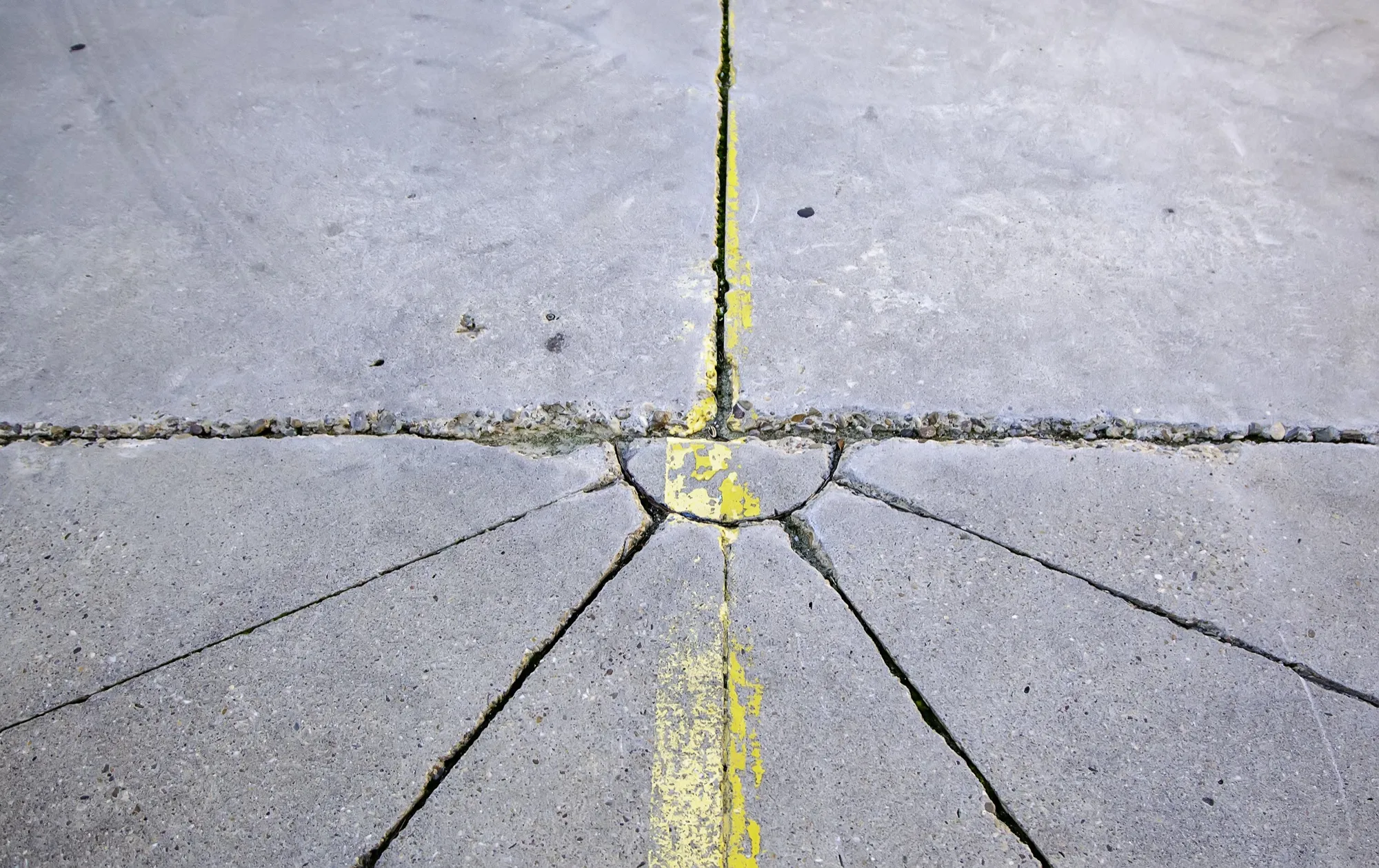
Trip-and-fall claims start with a raised edge.
Most walkway injuries on community and commercial property involve a vertical displacement at a joint or crack: a slab lifted by a tree root, a settled section, or a replacement panel that was never set level. They are easy to miss in daylight and easy to catch a toe on at dusk.
The property owner or association is responsible for the common area.
In California, a homeowners association is generally responsible for repairing and maintaining the common area, and commercial property owners owe visitors a reasonably safe premises. When a walkway defect was known, or should have been found with reasonable inspection, that responsibility is where claims focus.
A documented survey and repair record changes the conversation.
A dated survey listing every hazard, the repair method, and completion photos shows a property is inspected and maintained on purpose. It helps your manager, your insurer, and your attorney, and it is far easier to produce than to reconstruct after an incident.
Concrete keeps moving, so the record has to be kept up.
Trees grow, soil settles, and a property that was hazard-free one year can have new raised edges the next. An annual review keeps the record current and turns walkway safety into routine maintenance instead of a reaction to a complaint.
What a quarter inch means.
The 2010 ADA Standards for Accessible Design (Section 303, "Changes in Level") set the thresholds most inspectors, managers, and attorneys use to judge a walkway. They are also the thresholds our grinding specification is written to.
- Up to ¼"
- A vertical change of up to ¼ inch is permitted without treatment.
- ¼" – ½"
- Must be beveled with a slope no steeper than 1:2.
- Over ½"
- Must be treated as a ramp, which on a sidewalk means grinding it to a gentle slope or replacing the section.
- Over 2"
- Beyond the practical range for grinding. We recommend removal and replacement.
CHS grinds to a minimum 1:8 slope, much gentler than the standard requires, with a squared-off back edge. Read the specification.
Three things a board can do this quarter.
- 1
Get a baseline survey.
Have every path of travel walked and every hazard measured and documented. Ours is free, and the proposal it produces is organized so a board can approve it in one meeting.
- 2
Fix the worst first, and keep the record.
Repair the highest-traffic and highest-displacement locations now. Keep the survey, the approved scope, and the completion photos together in the association's or property's files.
- 3
Put it on the calendar.
Schedule an annual review so new hazards are found and priced before anyone reports them. Budget for it like landscaping or pool service.
This page is general information about walkway hazards and maintenance, not legal advice. Responsibility for a specific incident depends on the facts, your governing documents, and the law. Consult your association's or company's attorney and insurer about your situation.
What this looks like in practice.
Recent California sidewalk cases as reported in the press, the statutes and standards behind them, and the Orange County stories we have cited for years. CHS was not involved in any of these matters.
Recent California cases
- Whittier agrees to $7.5 million settlement after sidewalk fall NBC Los Angeles · October 2025
A woman injured on a sidewalk lifted by tree roots settled with the City of Whittier after trial had begun. Her attorney said the city had received complaints about the uplift for years.
- Davis woman receives $18.5 million after sidewalk fall leaves her paralyzed CBS Sacramento · November 2025
A 2022 fall on a defect reportedly hidden by shade and overgrown landscaping. Settled at mediation weeks before jury selection; a landscaping contractor contributed to the settlement.
- Los Angeles jury awards $3 million over broken sidewalk ABC7 Los Angeles · August 2025
A Woodland Hills photographer tripped on a sidewalk damaged in 2019. His attorneys argued city employees had seen the damage and not repaired it.
- $776,000 verdict for a three-quarter-inch sidewalk defect in Orange County Dordick Law (plaintiff's counsel case summary) · Beavers v. County of Orange
A jury verdict over a displacement of roughly ¾ inch, well inside the range that is routinely ground. Reported by the plaintiff's firm; amount as stated by counsel.
From the Orange County Register archive
- Woman wants at least $75,000 after fall in H.B.Orange County Register, Jaimee Lynn Fletcher · January 30, 2012
A Huntington Beach resident filed a claim after a fall on a sidewalk raised by tree roots, reporting a fractured wrist, two surgeries, and about $61,000 in medical bills.
- Couple want $1 million for trip-and-fallOrange County Register, Jeff Overley · July 11, 2011
A claim against the City of Irvine over a 1.5-inch sidewalk height difference near Shorebird and West Yale Loop, reportedly obscured by shadow, flowers, and leaves.
- Woman wants more than $25,000 after sidewalk fallOrange County Register, Jaimee Lynn Fletcher · May 27, 2010
A lawsuit against Huntington Beach over a raised section of public sidewalk near 17th Street that the plaintiff said caused a broken shoulder.
These three stories ran on the previous CHS website. The original articles are no longer available at their original addresses; headlines, bylines, and dates are as published.
Ready to make your walkways safer?
Tell us about the property and the walkways that concern you. We'll schedule a free site survey, document every hazard, and send a proposal you can take straight to your board or owner.
Or call 714-292-6150