Safe while we work. Safer when we're done.
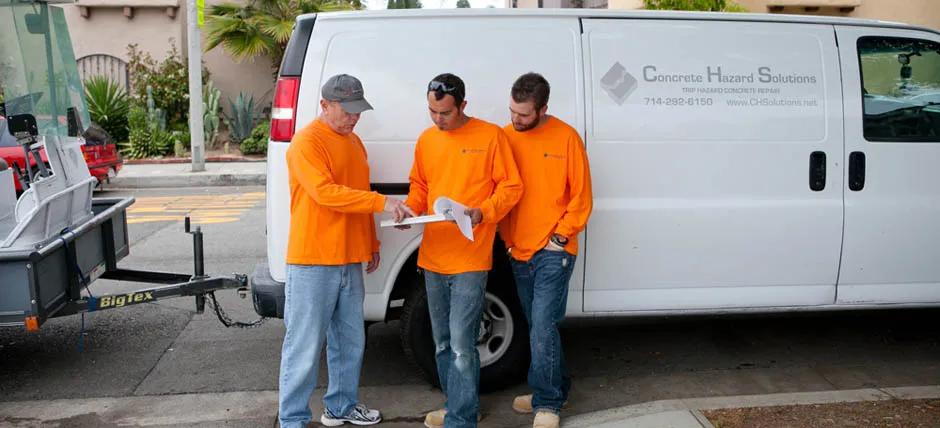
Walkways stay open while we work. Dust stays in the vacuum. Every repair is photographed and documented so the property is safer the day we leave and easier to keep that way. Here is what that looks like, and answers to the questions that come up before you approve the work.
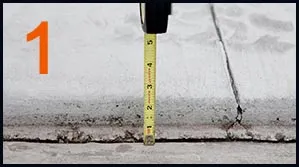
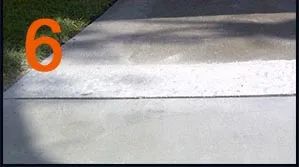
A raised joint measured on the survey, ground to a 1:8 bevel with a squared-off back edge. The adjacent slab is untouched.
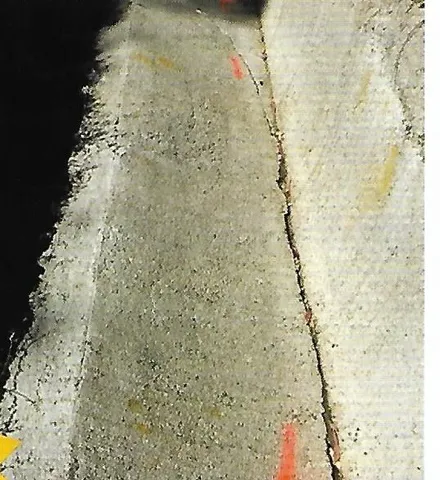
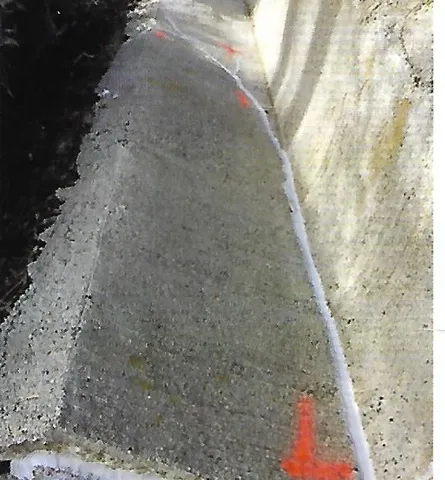
A long crack running down the channel was opened, cleaned, and sealed so runoff stays in the ditch instead of entering the slope.
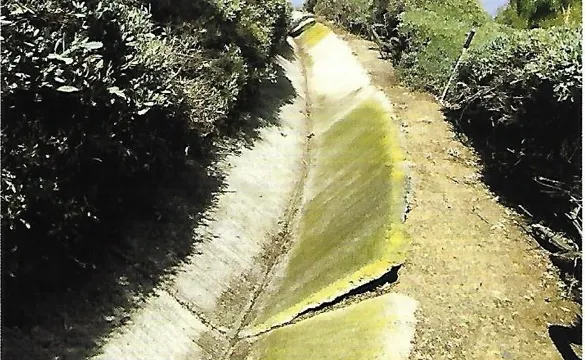
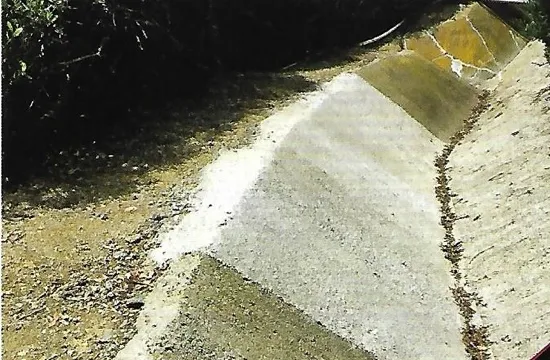
Broken and undermined sections were removed and re-poured to the original profile and grade.
Three phases of a clean grind.
Every grind is done the same way, to our published specification: remove the lip, cut the slope, finish the edge.
-
 01
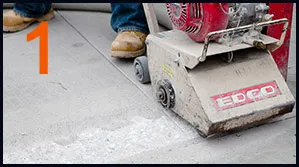
The scarifier takes off the lip.
A scarifier with its own vacuum chews through the raised edge and captures the dust as it goes. The heavy removal is done in minutes.
-
 02
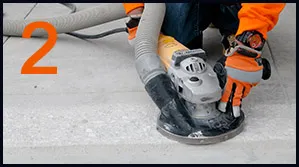
The bevel is sloped back at 1:8.
A 1-inch lip is sloped back a full 8 inches, a half-inch lip 4 inches. Far gentler than the standard requires, which is what makes the hazard disappear underfoot.
-
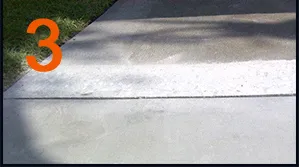 03
The hand grinder finishes it: squared off, straight line.
A dry hand grinder with vacuum smooths the bevel, squares off the back edge for a clean straight line, and leaves the neighboring slab untouched. Swept clean, hazard gone.
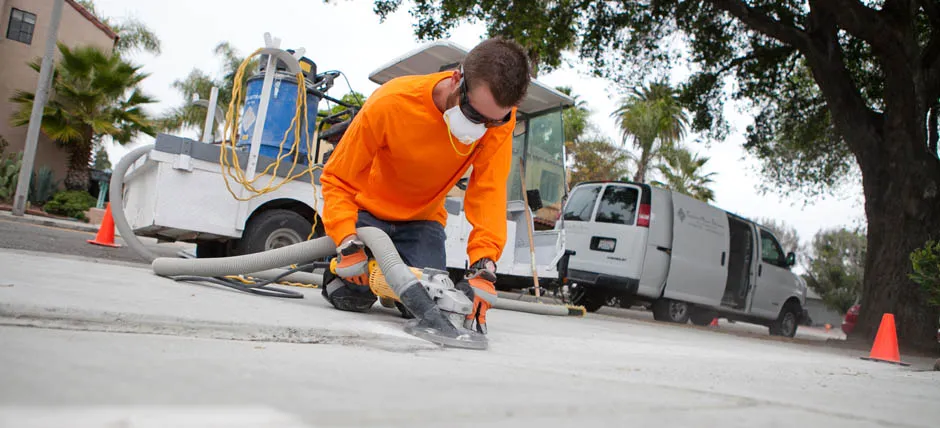
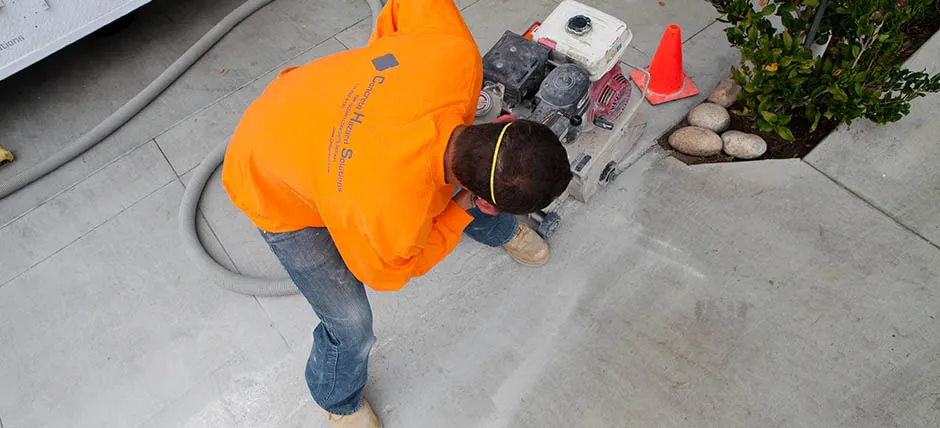
Clean, quiet, and out of the way.
Vacuum dust control on every grinder. Noise comparable to a leaf blower. Walkways stay open while we work.
Straight answers to what comes up.
If yours isn't here, ask it on the survey request form and we'll answer it directly.
- Is the site survey really free?
- Yes. The survey and the written proposal are free and carry no obligation. You pay only for repairs you approve.
- How do you decide between grinding and replacing a section?
- By the measurement. Raised edges from ¼ inch up to 2 inches are ground. Over 2 inches, or where a section is badly cracked or being actively lifted by a root, we recommend removal and replacement. Defects that are not a height difference, such as spalls and chips, are patched. The proposal shows the recommendation for each location.
- How disruptive is the work for residents?
- Grinding is quick and quiet by construction standards. Each hazard typically takes minutes, the grinders have attached vacuums for dust control, and the noise is comparable to a leaf blower. Walkways stay open except for the few feet being worked on. Removal and replacement requires closing the section while new concrete cures, and we coordinate that timing with you.
- What does a ground area look like afterward?
- A clean, beveled slope with a straight back line. The ground surface is initially lighter than the surrounding concrete and the aggregate shows; it weathers toward the surrounding color over time. The finish is not slippery and has about the same traction as the undisturbed concrete.
- Do your repairs meet ADA requirements?
- We grind to our own published specification, which is written to the changes-in-level requirements of the 2010 ADA Standards for Accessible Design (Section 303): changes up to ¼ inch are permitted, ¼ to ½ inch must be beveled, and anything greater must be ramped or removed. Whether a property as a whole complies with the ADA depends on more than its sidewalks, so we describe our work by the specification rather than making a compliance claim for the property.
- Can the work be phased to fit our budget?
- Yes. Because the proposal is organized by location, you can approve all of it, part of it, or spread it across budget years. Many associations repair the highest-traffic areas first and schedule the rest with an annual review.
- What about tree roots?
- Grinding does not disturb roots, which is one reason it is the right first choice near mature trees. Where a root is actively lifting a slab and will keep doing so, we will say so and recommend removal and replacement with the root addressed.
- Are you licensed and insured?
- Concrete Hazard Solutions, Inc. is a licensed California contractor and carries general liability insurance. License number and certificates are available on request.
Ready to make your walkways safer?
Tell us about the property and the walkways that concern you. We'll schedule a free site survey, document every hazard, and send a proposal you can take straight to your board or owner.
Or call 714-292-6150